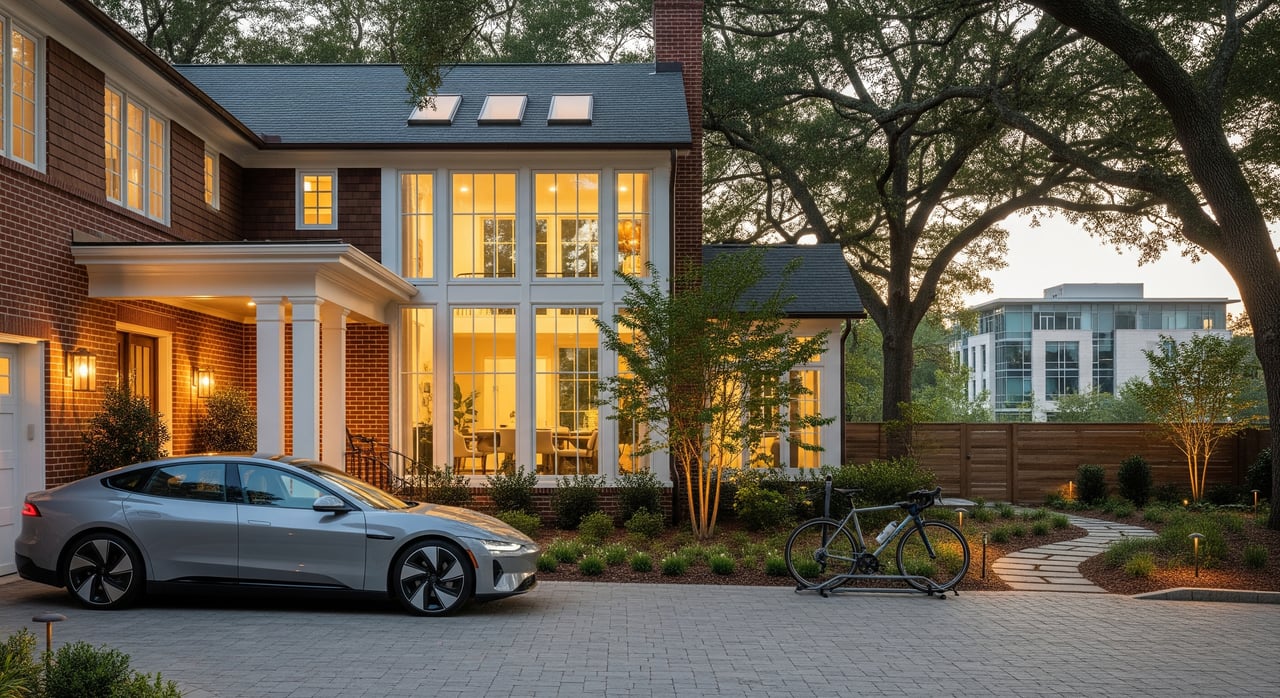
Is your daily drive to Research Triangle Park the dealbreaker in your Durham home search, or the key that opens more neighborhoods? If you work in RTP, commute time, route options, and transit access shape where you should focus and what type of home fits best. You want clarity on tradeoffs, not guesswork. In this guide, you’ll see how commutes from Downtown, South Durham, and North Durham typically compare, how transit and shuttles can shift your options, and how lifestyle and housing types align with each area. Let’s dive in.
RTP commute basics in Durham
Key routes to know
Most Durham-to-RTP commutes flow along a few corridors:
- NC-147, the Durham Freeway, connects Downtown to I-40 and the southern RTP entrances.
- I-40 is the main east–west spine for many South Durham routes.
- NC-54, T.W. Alexander Drive, US-70, and NC-55 handle local access and cross-park circulation.
Congestion hot spots often include the NC-147 and I-40 interchange, I-40 near RTP in both directions during rush hour, and major T.W. Alexander Drive intersections. Small changes to departure time can make a big difference.
Typical drive-time ranges
These ranges reflect commonly observed patterns and are meant to guide early planning. Exact times vary by destination building, time of day, and incidents. Always test your specific route with a live map.
- South Durham, including the Southpoint and Hope Valley areas: off-peak about 10–25 minutes; peak about 15–35 minutes.
- Downtown Durham and adjacent historic districts: off-peak about 15–30 minutes; peak about 25–45 minutes or more depending on NC-147 and I-40 flow.
- North Durham neighborhoods north of Downtown: off-peak about 20–40 minutes; peak about 30–50 minutes or more.
The takeaway: proximity to I-40 and southeastern RTP entrances generally shortens the drive, while Downtown can be competitive outside rush hour. North Durham tends to run longer but can offer different housing and price advantages.
Modes that change your search
Transit and employer shuttles
Public transit and employer programs can improve reliability and reduce parking needs.
- GoTriangle regional bus routes connect Durham with RTP. Check express options and park-and-ride lots through the GoTriangle trip planning tools.
- GoDurham offers city routes that link neighborhoods to central hubs. Routing to RTP often involves transfers, so align your search with frequent corridors on the GoDurham local service map.
- Many large RTP employers offer shuttle connections from transit hubs or park-and-ride locations. Explore current initiatives and commuter resources via the Research Triangle Park website.
If you plan to use transit or shuttles, prioritize homes within a short walk of major stops or hubs and confirm schedules that match your work hours.
Biking and micromobility
Durham’s greenways, including the American Tobacco Trail, make bike commutes possible from select neighborhoods, especially with e-bikes that extend range. For longer distances, many riders combine bike and transit. Look for safe bike storage at home and clear on-street or greenway access.
Carpools, vanpools, and reliability
A high concentration of research and tech employers supports carpools and vanpools, often paired with guaranteed-ride-home programs. For live incident and construction information that can affect reliability, use NCDOT travel updates during commute planning.
Neighborhood tradeoffs by area
Downtown Durham
- Housing types: converted lofts and condos, mid-rise apartments, plus nearby historic single-family homes in places like Trinity Park and Morehead Hill.
- Lifestyle: highest walkability, dining, arts, and nightlife. Centralized transit access at main hubs.
- Commute to RTP: very direct via NC-147. Off-peak drives can be competitive; peak hours are more variable. Some buildings have limited on-site parking, so confirm employer parking benefits or shuttle options.
- Best fit: you value walkability and cultural access, can accept variable commute times, and want a smaller home footprint with lower maintenance.
South Durham
- Housing types: newer single-family homes and townhomes in master-planned neighborhoods near major retail, with common features like garages and larger yards.
- Lifestyle: convenient access to shopping and services, with a car-first daily rhythm.
- Commute to RTP: often the shortest and most predictable because of proximity to I-40 and southeastern RTP entrances. Parking at home is straightforward.
- Best fit: you want a shorter, more predictable drive, prioritize space and storage, and prefer newer construction or neighborhood amenities.
North Durham
- Housing types: older bungalows, modest single-family homes, some duplexes, and renovation opportunities. Many streets have mature trees and varied lot sizes.
- Lifestyle: quieter residential feel with a growing local food and arts scene in pockets.
- Commute to RTP: longer average distances. Viable for buyers who value price per square foot or older-home character and accept a longer drive or plan to use carpools or shuttles.
- Best fit: you seek value and character, and commute time is flexible or offset by hybrid schedules.
Price tiers and expectations
Rather than fixating on a single median number, think in relative tiers that reflect what buyers typically see on the market:
- Downtown and highly renovated historic blocks often land in the upper price tier for Durham.
- South Durham subdivisions and amenitized neighborhoods tend to sit in the mid to upper-mid tiers, offering strong space-to-price ratios.
- North Durham and older in-city pockets often fall in the mid to lower-mid tiers, with renovation potential in select areas.
If you want exact, current numbers, request neighborhood-level data from local MLS feeds or recent market snapshots. County and regional trends are also summarized by the U.S. Census Bureau’s ACS commuting and housing data and local planning sources.
How commute needs reshape your search
Define your maximum door-to-door time
Know your threshold before you start touring. Is your ceiling 20, 35, or 45 minutes? The answer filters entire neighborhoods in or out and affects housing type and price expectations.
Match your mode to the map
- Driving: prioritize quick I-40 or NC-147 access and multiple route options to avoid a single bottleneck.
- Transit or shuttle: focus near bus corridors, transit hubs, or designated pickup points.
- Biking: map greenways and safe streets, and confirm storage or garage needs for bikes and gear.
Align home features with weekday reality
- If predictability matters, look for garages or deeded parking and easy access to two or more commute routes.
- If you want walkable evenings and weekends, Downtown and adjacent neighborhoods shine, but confirm employer parking or shuttle benefits to simplify weekdays.
- If you need flexible space for hybrid work, consider bonus rooms or dens that convert to an office on off-days.
Buyer profiles and where to look
Nightlife plus manageable commute
Target Downtown Durham and nearby walkable blocks. Off-peak drives can be short, and transit or shuttles may offset rush-hour variability. Look for buildings with clear parking policies and good access to NC-147.
Shorter, predictable drive with space
Focus on South Durham neighborhoods near I-40 and southeastern RTP entrances. You’ll find more single-family homes, garages for storage, and easy errand runs. This is a strong match if minimizing weekday stress is a priority.
Value first, commute second
Explore North Durham and older in-city pockets with renovation potential. If a longer drive is acceptable or offset by hybrid schedules, these areas can stretch your budget. Consider forming carpools or joining a vanpool.
Hybrid workers with 2–3 in-office days
You can look more broadly across the city and focus on home-office function, storage, and neighborhood amenities. Map how only two or three weekly drive days shift your acceptable commute radius.
Reliability tips that save time
Use this quick checklist to keep commute surprises to a minimum:
- Test-drive your actual route during the AM peak, not just once, but twice.
- Compare two routing options for each home you like to avoid single-point failures.
- Note construction zones and planned projects through NCDOT updates.
- If using transit, confirm headways and transfer points on GoTriangle schedules and GoDurham routes.
- If school logistics matter, verify current attendance boundaries with Durham Public Schools.
Map ideas for your short list
When you narrow to a few homes, build simple map layers to visualize tradeoffs:
- 15, 30, and 45-minute drive contours to your specific RTP building for AM peak and midday.
- Transit overlays to show walking distance to bus stops and hubs.
- Greenways, parks, and grocery within a 10-minute drive or bike ride.
- A simple comparison of route choices from each home to bypass common bottlenecks.
These overlays make it clear where a location shines and where to expect variability.
A local partner for a smarter search
Choosing between Downtown, South Durham, and North Durham is easier when you pair commute realities with the right home type and price tier. You do not have to guess. With long-standing Triangle experience and Compass-backed tools, our team can help you align commute goals, budget, and lifestyle across the neighborhoods that fit best. Ready to see a data-informed short list and tour homes that match your weekday routine?
Let’s connect with Terra Nova Global Properties.
FAQs
Which Durham neighborhoods have the shortest RTP commute?
- Generally South Durham neighborhoods close to I-40 and southeastern RTP entrances offer the shortest average drives, while Downtown can be competitive off-peak but more variable during rush hour.
Is Downtown Durham practical if I work in RTP?
- Yes, if you value walkability and amenities and can accept commute variability or use transit or employer shuttles; confirm parking benefits and test-drive your route at peak times.
Can I bike from Durham to RTP?
- From certain neighborhoods, especially with e-bikes and greenway connections, biking is feasible, and many riders combine bike and transit for longer trips.
Does living close to RTP always cost more?
- Not always; South Durham often provides strong space-to-price value with proximity, while centrally located renovated historic homes downtown can command higher prices, so compare current listings and trends before deciding.