Torn between Pittsboro and Hillsborough for that small-town Triangle lifestyle? You are not alone. Both offer walkable historic cores, easy access to Chapel Hill and Durham, and strong outdoor options, yet the day-to-day feel is very different. In this guide, you will see how the towns compare on vibe, nature, growth, housing, commutes, transit, schools, and services so you can zero in on the right fit. Let’s dive in.
Where they sit in the Triangle
Hillsborough sits just northwest of Chapel Hill in Orange County, and Pittsboro anchors Chatham County to the southwest. Both are known as small-town choices within reach of the region’s universities and employers. Hillsborough’s visitor bureau frames the town as a history and arts destination in the Durham–Chapel Hill area, which reflects what you see on the ground in its compact main street and events calendar (Visit Hillsborough).
Population baselines help set expectations. Hillsborough counted 9,660 residents in the 2020 Census, with a 2024 QuickFacts estimate of about 9,773 (U.S. Census QuickFacts). Pittsboro recorded 4,537 residents in the 2020 Census, and recent estimates place it in the mid-4,000s.
Commute times reflect location. Hillsborough’s mean travel time to work sits around 21.7 minutes in recent Census snapshots (U.S. Census QuickFacts), while Pittsboro’s average is closer to 30.8 minutes according to ACS data (Census Reporter, Pittsboro profile). In simple terms, Hillsborough is physically closer to Chapel Hill and the Durham job core, while Pittsboro trades a longer drive for lake access and large-scale new development.
Downtown vibe and daily life
Hillsborough: Historic main street and arts
Hillsborough is a formally recognized historic district with more than 100 preserved 18th and 19th century structures. Churton Street forms a classic main-street spine with galleries, bookshops, and regular events. The town leans into its cultural calendar with Last Fridays, festivals, and art walks that energize evenings and weekends (Visit Hillsborough). If you want a ready-made downtown experience anchored by history and the arts, Hillsborough delivers it at a walkable, small-town scale.
Pittsboro: Courthouse circle and growth
Pittsboro’s core centers on the historic Chatham County Courthouse and a compact strip of local shops, galleries, and restaurants. You feel the small-town identity around the courthouse circle, and you will also notice how quickly the town is changing. Just beyond downtown, the Chatham Park master plan is adding new neighborhoods, retail, healthcare, and parks. The day-to-day vibe is a juxtaposition: traditional courthouse-town energy next to major, master-planned growth.
Nature and outdoor access
Pittsboro side: Jordan Lake and the Haw River
If weekends on the water pull you, Pittsboro has the inside track. Jordan Lake is one of the Triangle’s signature outdoor assets, with boat ramps, beaches, camping, and shoreline trails operated by the U.S. Army Corps of Engineers and North Carolina State Parks. It is a practical draw for boating, fishing, swimming, and picnics (Jordan Lake recreation overview). Facilities can be seasonally adjusted after major storms, so check operating status before you go.
The Haw River and local tributaries are part of the landscape in Chatham County. Conservation groups actively track water quality and development impacts, especially around large projects like Chatham Park. If river access and watershed health are important to you, it is worth following those conversations (Haw River Assembly summary).
Hillsborough side: Eno River and Occoneechee Mountain
Hillsborough places trails and river scenery right at your feet. The paved Riverwalk along the Eno connects downtown to parks and links into regional trail systems. Eno River State Park and Occoneechee Mountain State Natural Area sit minutes away, offering short hikes, overlooks, and shaded paths that are easy to reach after work or on a quick Saturday morning (Hillsborough hiking highlights). If you want everyday access to a riverfront greenway and conserved natural areas woven into town, Hillsborough stands out.
Growth and new neighborhoods
Chatham Park: Scale and timeline
Chatham Park is reshaping the Pittsboro side of the Triangle. Public and developer sources describe a project area between roughly 7,100 acres, based on municipal planning documents, and about 8,500 acres in developer marketing. The approved plan anticipates thousands of homes across product types with significant commercial space and community amenities. Figures vary by planning stage and source, so it is best to cite both the town and developer descriptions for context (Town of Pittsboro, Chatham Park overview).
Big-name announcements underline the scale. Disney’s Storyliving brand unveiled Asteria, reported as a large neighborhood inside Chatham Park with a plan for thousands of residences and lifestyle amenities (Axios coverage of Asteria). A Del Webb 55-plus community, expanding healthcare investment, and new retail are also in the pipeline. UNC Health acquired land inside Chatham Park for future medical facilities, signaling longer-term service expansion for residents (Developer and UNC Health update).
Balanced perspective matters too. Environmental organizations have raised questions about river health and oversight as growth advances. Reviewing both municipal and developer materials alongside conservation group updates can help you understand trade-offs in detail (Haw River Assembly summary).
Housing styles and price context
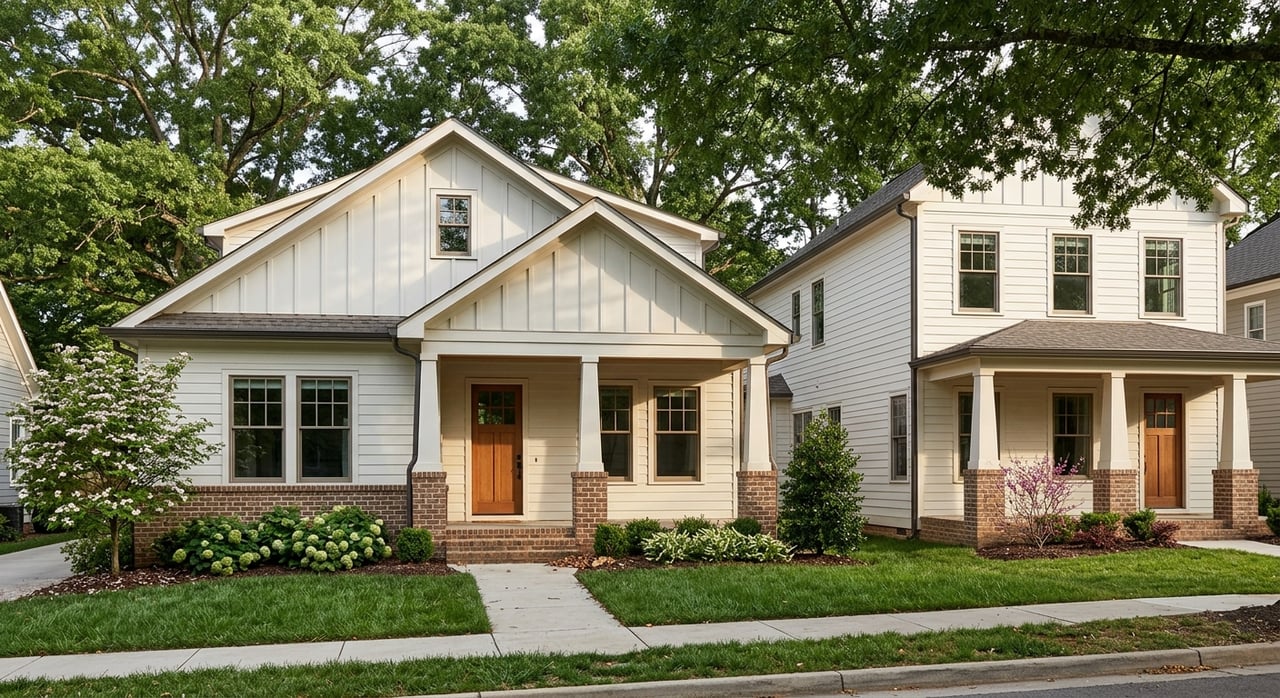
Hillsborough’s housing stock skews older inside town, with preserved historic homes and later remodels near downtown, and a mix of subdivisions on the edges. Pittsboro has a smaller historic core of bungalows and ranches, plus a rapid rise of new-construction neighborhoods associated with Chatham Park, including townhomes, single-family homes, apartments, and active-adult options. The result is a clear style choice: character homes and established neighborhoods in Hillsborough, or a wide slate of new builds and planned amenities in Pittsboro.
For prices, think in ranges rather than one number, since zip code mix can shift medians. As of early 2026, third-party indexes place typical home values in Pittsboro in the low to mid 500,000s and Hillsborough in the low to mid 400,000s. New-construction neighborhoods in Pittsboro often list above older in-town inventories and may include HOA fees tied to planned amenities. Always verify current pricing and fee structures for specific communities when you are ready to tour.
Commutes and transit options
Drive times and key routes
Pittsboro is served by US 64 east to Apex and Cary and US 15/501 north toward Chapel Hill. Hillsborough sits near NC 86, US 70, and has quick access to I 85 and I 40. Those corridors explain the commute difference you see in Census data. Hillsborough’s mean commute runs around 21.7 minutes, while Pittsboro’s is closer to 30.8 minutes, reflecting distance to Chapel Hill and Durham job centers as well as road geometry (U.S. Census QuickFacts; Census Reporter, Pittsboro). Your commute is personal, so test your exact route at peak hours with a mapping app before deciding.
Bus and regional connections
Hillsborough benefits from established regional bus links through GoTriangle, including service connecting Hillsborough and Chapel Hill as part of the broader Triangle network. A future Hillsborough Amtrak station has also been discussed for passenger service on the existing rail corridor, which would add another mobility layer over time. For schedules and service changes, start with the regional transit site (GoTriangle service updates).
Pittsboro’s public transit is more limited and often reservation-based. Chatham County operates local and regional runs through Chatham Transit, including fixed routes that connect Pittsboro with Chapel Hill on weekdays. If daily bus service is important to your routine, Hillsborough usually offers a stronger set of scheduled options.
Schools and services
School districts differ by county. Properties in Pittsboro are served by Chatham County Schools, while Hillsborough addresses fall within Orange County Schools. Specific school assignments depend on the property address and current boundary maps, and assignments within Chatham Park vary by neighborhood. Always confirm schools using the district’s boundary lookups or the developer’s education resources when you are focused on a particular home (Chatham Park education overview).
Healthcare access is strong on both sides. Hillsborough has immediate access to outpatient clinics and is positioned between UNC and Duke health systems in Chapel Hill and Durham. On the Pittsboro side, UNC Health has acquired a large parcel within Chatham Park to expand services over time, and Chatham Hospital serves the county from nearby Siler City (Developer and UNC Health update).
Taxes and budgeting
Property taxes vary by county, municipality, and special districts, and they are applied to each home’s assessed value. Both Orange and Chatham counties completed revaluations around 2025, which reset many assessed values. Because rates and assessments change with each fiscal year, build a quick estimate using the current county assessor tools and confirm any exemptions that may apply to you. Your agent can help you model different scenarios as you compare neighborhoods.
Which town fits you: quick personas
The Chapel Hill or Durham commuter
- You want a shorter daily drive or bus option.
- You value a walkable historic main street and quick access to I 40 and I 85.
- Consider Hillsborough for its mean commute time and Riverwalk lifestyle.
The historic-home seeker who loves arts and events
- You want older architecture, tree-lined streets, and a lively small downtown.
- You enjoy evening art walks, independent bookshops, and weekend festivals.
- Hillsborough’s preserved core and programming may fit your routine (Visit Hillsborough).
The new-construction and lake-weekend buyer
- You want fresh floor plans, amenity-rich neighborhoods, and HOA-managed common areas.
- You plan to spend free time on the water, boating or hiking.
- Pittsboro offers fast-growing choices inside Chatham Park and easy access to Jordan Lake (Jordan Lake recreation overview).
Buyer checklist: first steps
- Map your commute. Compare your real work and school routes at peak times. Note the mean commute differences: about 21.7 minutes in Hillsborough and 30.8 minutes in Pittsboro based on ACS data (Hillsborough QuickFacts; Pittsboro profile).
- Choose your housing style. Historic home and infill neighborhood, or new-build with planned amenities and an HOA? Review both options before you set your budget.
- Prioritize transit. If you want scheduled bus service, explore GoTriangle connections for Hillsborough and compare that to Chatham County’s more limited options (GoTriangle service updates).
- Confirm schools. Use district boundary tools for the exact property, and review Chatham Park’s education resources for new neighborhoods (Chatham Park education overview).
- Check nature access. If a daily greenway is key, the Eno Riverwalk delivers. If weekends on the water call, Jordan Lake is a regional draw. Always verify trail and facility status before heading out (Hillsborough hiking highlights; Jordan Lake overview).
- Stay informed on growth. Read both municipal and developer updates on Chatham Park, and track conservation group perspectives for a full picture (Town of Pittsboro overview; Developer update; Haw River Assembly).
The bottom line
If you crave a ready-made, historic main street with riverfront trails and a shorter drive to Chapel Hill or Durham, Hillsborough is likely your match. If you prefer new-construction choices, emerging amenities, and weekends at Jordan Lake, Pittsboro makes a compelling case. Both towns share the Triangle’s energy at a more relaxed pace, and each rewards a focused search that weighs commute, home style, schools, and outdoor life.
When you are ready to compare specific neighborhoods, new communities, and historic streets on the ground, connect with a team that knows both sides of the Triangle. Reach out to Terra Nova Global Properties for local guidance, on-the-ground pricing context, and a clear plan to find your fit.
FAQs
Which town is more affordable in early 2026?
- Third-party indexes place Pittsboro’s typical home values in the low to mid 500,000s and Hillsborough in the low to mid 400,000s as of early 2026; verify current listings and fees for your target neighborhoods.
How long are typical commutes from each town?
- Recent Census data shows Hillsborough’s mean commute around 21.7 minutes and Pittsboro’s about 30.8 minutes; test your exact route at peak hours to confirm your drive (Hillsborough QuickFacts; Pittsboro profile).
What outdoor recreation stands out in each place?
- Hillsborough offers the Eno Riverwalk, nearby Eno River State Park, and Occoneechee Mountain for quick hikes; Pittsboro puts you near Jordan Lake for boating, fishing, swimming, and camping (Hillsborough hiking highlights; Jordan Lake overview).
How do transit options compare between Pittsboro and Hillsborough?
- Hillsborough connects into the regional GoTriangle bus network with scheduled service to Chapel Hill and Durham, while Pittsboro’s options through Chatham County are more limited and may require reservations (GoTriangle service updates).
What is Chatham Park and how could it affect life in Pittsboro?
- Chatham Park is a multi-thousand-acre master-planned community adding homes, retail, parks, and services over many years; review both municipal and developer materials, plus conservation perspectives, to understand benefits and trade-offs (Town of Pittsboro overview; Axios on Asteria; Haw River Assembly).
Which school districts serve these towns and how do I verify a property’s assignment?
- Pittsboro is in Chatham County Schools and Hillsborough is in Orange County Schools; always use each district’s boundary lookup or confirm with the county to verify the exact assignment for a specific address, especially for new neighborhoods in Chatham Park (Chatham Park education overview).