If you are wondering what Carrboro actually feels like once the weekend visitors leave, the answer is refreshingly simple: it stays lively. This is a town where grocery runs can turn into lawn music, where public spaces host regular community traditions, and where short trips by bike, bus, or foot help shape the pace of the day. If you are considering a move or just trying to picture daily life here, this guide will help you understand the rhythms that make Carrboro distinct. Let’s dive in.
Carrboro Feels Small-Scale and Connected
Carrboro has an active but compact feel that stands out in Orange County. The Census Bureau’s 2025 estimate puts the population at 20,962, and the town’s land use helps explain why it often feels intimate rather than sprawling.
According to the town’s comprehensive planning framework, about 56% of Carrboro’s land area is residential, while 35% is parks, open space, or natural resources. Only 4% is commercial. In everyday terms, that means homes, green space, and neighborhood streets play a bigger role in the town’s identity than large shopping corridors.
Downtown matters here in a very practical way. Carrboro’s Downtown Area Plan describes downtown as the town’s social, economic, and cultural core, so the public spaces and streetscapes are not just backdrop. They are part of how people move through the day, meet neighbors, and connect errands with community life.
Markets Shape the Weekly Routine
One of the clearest examples of Carrboro’s everyday rhythm is the Carrboro Farmers’ Market at Town Commons, located at 301 W Main Street. It runs on Saturday mornings year-round and Wednesday afternoons seasonally, giving residents more than one chance to fold local shopping into a regular week.
The market says all goods sold are produced within 50 miles of the market. It also accepts SNAP/EBT and participates in Double Bucks, which makes the market part of daily food access as well as a social gathering place.
Town Commons itself plays a larger role than many civic greens. Carrboro’s walking tour notes that it hosts celebrations such as Carrboro Day, the July 4 celebration, and the Halloween Carnival. That steady use gives the space a shared, lived-in feel throughout the year.
Weaver Street Blends Errands and Social Life
For many people, everyday life in Carrboro includes regular stops at Weaver Street Market at 101 East Weaver Street. The community-owned natural foods grocery is open daily from 7 a.m. to 9 p.m., which makes it part of both quick weekday routines and slower weekend visits.
What makes Weaver Street especially telling is the setting around it. The market describes its shady front lawn as part of a walkable downtown where you can reach the farmers’ market, restaurants, shops, galleries, and music venues on foot.
That mix of uses changes the feel of a simple grocery trip. Sunday Brunch Music on the lawn each week shows how often Carrboro combines practical errands with public life, making the town feel social without needing a big event calendar to create energy.
Music Is Part of Ordinary Life
Carrboro’s music scene is not limited to occasional concerts. The town’s arts page says Cat’s Cradle has been the Triangle’s premier live music venue for more than 40 years, and its location less than a mile from the UNC-Chapel Hill campus keeps it close to the daily flow of the area.
What matters for lifestyle is not only the venue’s history but also its consistency. With activity in both the main room and the Back Room, live performances are woven into normal weeknights as well as larger shows.
The result is a town where music feels present rather than scheduled. It spills into regular routines, downtown conversations, and nearby public spaces, adding texture to life even if you are not planning every evening around entertainment.
Art Adds a Monthly Pulse
Carrboro’s arts identity also shows up in recurring public events. The ArtsCenter, at 400 Roberson Street, brings together classes, performances, and gallery exhibitions, which broadens the cultural mix beyond live music alone.
The 2nd Friday Art Walk adds another layer to the town’s rhythm. Held from 6:00 to 9:00 p.m. on the second Friday of every month across Carrboro and Chapel Hill, it includes participating sites such as The ArtsCenter and Carrboro Town Hall.
That matters because it creates a visible, predictable pattern in town life. Even if you are not deeply plugged into the arts, you can still feel that monthly pulse in the downtown atmosphere and foot traffic.
Getting Around Supports Short Trips
Carrboro works well for the kind of short, repeat trips that shape everyday living. The town notes that it is a Silver-level Bicycle Friendly Community, first recognized in 2010 and renewed in 2024, and NC Bike Route 2, also part of the Mountains-to-Sea Trail, runs through the center of town.
That bike infrastructure supports more than recreation. It reinforces a local habit of moving between home, downtown, parks, and nearby destinations without always depending on a car.
Transit also plays a role. Chapel Hill Transit says service to Chapel Hill, Carrboro, and UNC is fare-free and operates seven days a week, which helps support routines like commuting, meeting friends, and running daily errands.
Parks Keep Outdoor Time Close By
Carrboro’s green space is not an afterthought. The town manages eight park or play facilities, and the range of spaces gives residents multiple ways to spend time outdoors close to home.
Town Commons offers a 1.7-acre civic lawn with a pavilion and bandstand, which supports gatherings in the heart of town. Anderson Community Park covers 55 acres and includes fields, a disc golf course, a dog park, a fishing pond, and a walking trail.
Dr. Martin Luther King Jr. Park adds a community garden, bicycle pump track, and amphitheater. Near downtown, the Adams Tract provides a forested natural area adjacent to Wilson Park. Together, these spaces support the walkable, outdoor-heavy rhythm that many people associate with Carrboro.
Historic Streets Give Carrboro Texture
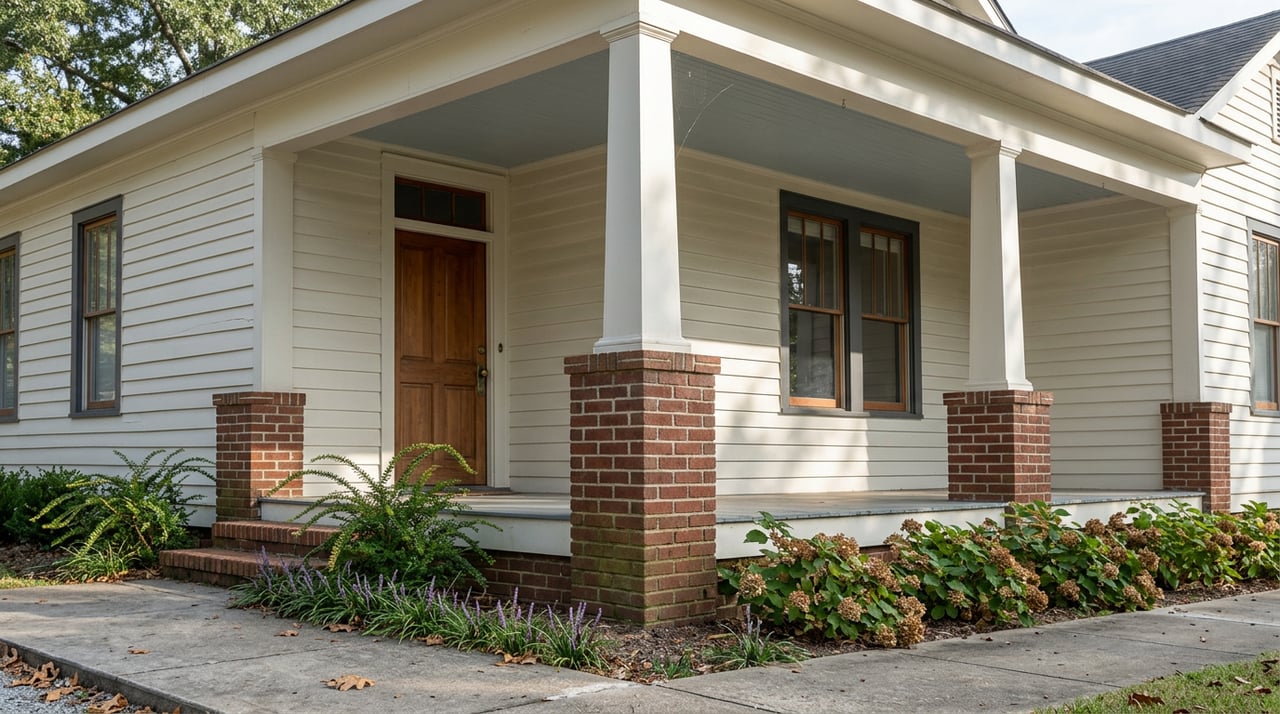
Part of Carrboro’s appeal comes from the way its history still shows up in the built environment. The town’s walking tour identifies East Main Street as the original business district, while Poplar Avenue, Lindsey Street, and Weaver Street make up much of the original residential district.
Those areas include many 1920s and 1930s mill houses, which help explain why parts of Carrboro feel layered and rooted rather than newly planned. Carr Mill Mall adds to that story, since it began as the Alberta Cotton Mill.
For you as a buyer or homeowner, this history often translates into a town with visual variety and a stronger sense of place. Older homes, adapted buildings, and downtown-adjacent streets all contribute to Carrboro’s recognizable character.
Housing Includes a Range of Choices
Carrboro is not defined by a single housing type. The town’s housing policy language emphasizes a goal of having a home for everyone, with efforts aimed at preventing displacement and encouraging affordability.
The town also states a policy goal that at least 15% of units in new residential developments of five or more units should be affordable. In its 2024 community survey, residents identified a range of housing types and price points as important priorities, including apartments, townhomes, condos, duplexes, and single-family homes.
That mix matters if you are trying to match lifestyle with location. In Carrboro, you may find older mill-era homes, downtown-adjacent condos and apartments, and newer housing shaped by ongoing efforts to support broader access and variety.
What Everyday Life in Carrboro Really Means
When you put it all together, Carrboro’s lifestyle is less about any one attraction and more about how daily life overlaps. The farmers’ market, Town Commons, Weaver Street lawn, music venues, parks, and bike routes all reinforce one another.
You see that in small moments. A Saturday market trip can lead to lunch downtown, a Sunday grocery stop can include lawn music, and an ordinary evening can end with a show, an art walk, or a walk through a nearby park.
For buyers and sellers, that is part of what gives Carrboro lasting appeal. The town offers a neighborhood-scale feel, visible civic life, and a built environment that supports connection in simple, repeatable ways.
If you are thinking about buying, selling, or simply narrowing down where you want to live in the Chapel Hill-Carrboro area, local context matters. Patricia Owen can help you evaluate Carrboro not just by price or property type, but by how the town’s day-to-day rhythm fits the life you want to build.
FAQs
What is everyday life in Carrboro like for residents?
- Everyday life in Carrboro often centers on short trips, walkable downtown spaces, regular market visits, public events, live music, and easy access to parks and green space.
Where is the Carrboro Farmers’ Market located?
- The Carrboro Farmers’ Market is located at Town Commons at 301 W Main Street, with Saturday morning hours year-round and Wednesday afternoon hours seasonally.
What makes downtown Carrboro feel active?
- Downtown Carrboro serves as the town’s social, economic, and cultural core, with spaces like Town Commons, Weaver Street Market, music venues, galleries, and recurring public events contributing to daily activity.
How do people get around in Carrboro?
- People get around Carrboro by car, bike, bus, and on foot, supported by fare-free Chapel Hill Transit service seven days a week and the town’s Silver-level Bicycle Friendly Community status.
What kinds of homes can you find in Carrboro?
- Carrboro includes a range of housing types, including apartments, condos, townhomes, duplexes, single-family homes, and older mill-era houses in established areas.
Are there parks and outdoor spaces in Carrboro?
- Yes, Carrboro manages eight park or play facilities, including Town Commons, Anderson Community Park, Dr. Martin Luther King Jr. Park, and the Adams Tract natural area.