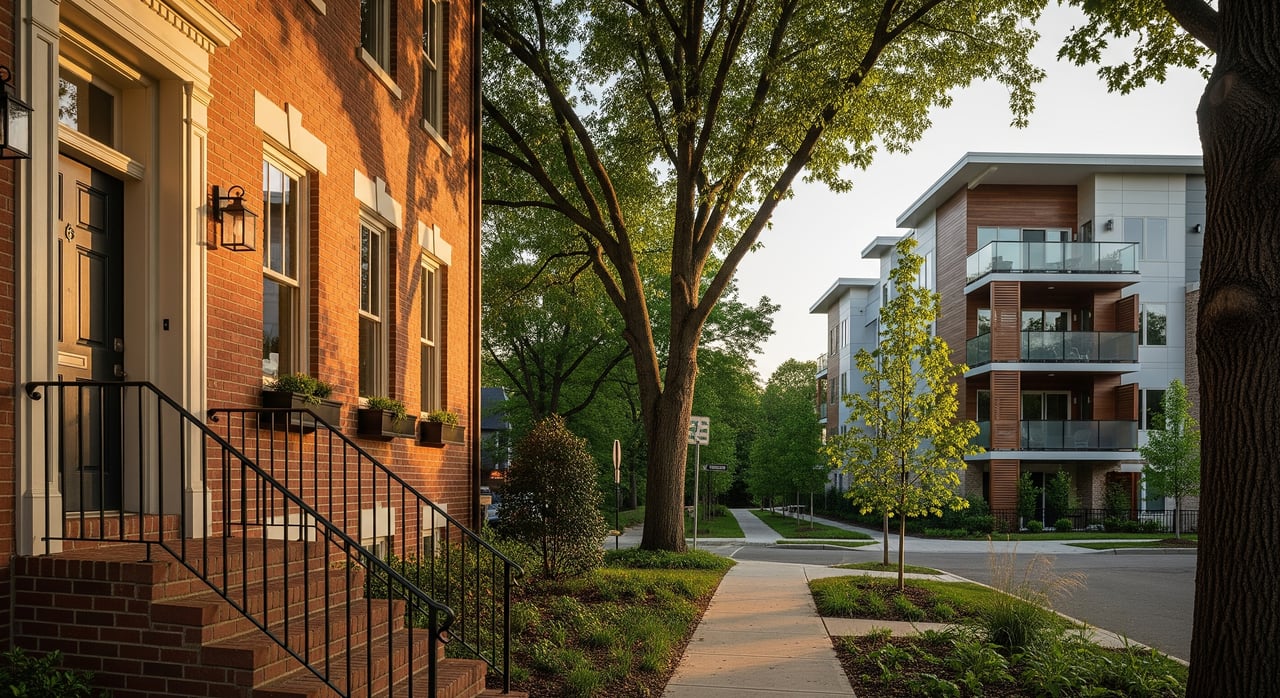
Trying to choose between a walkable condo near Weaver Street and a townhome with a private driveway? Carrboro offers both, and each option fits a different lifestyle and budget. If you are relocating for UNC, RTP, or simply want a low-maintenance home close to local culture, getting the condo vs. townhome decision right will shape your daily routine and monthly costs. This guide breaks down what to expect on maintenance, HOA coverage, walkability, parking, and commuting in Carrboro so you can move with confidence. Let’s dive in.
What condo living looks like in Carrboro
Condo buildings in Carrboro tend to be smaller, low-rise communities close to downtown and UNC. You own the interior of your unit while the homeowners association (HOA) owns and maintains exterior elements and common areas. This setup keeps your personal maintenance light and helps you focus on location and convenience.
You will often see assigned parking, shared entries, and limited outdoor space. HOA fees may be higher than for many townhomes because the association covers the building’s exterior, grounds, and shared systems. The tradeoff is strong walkability and a simple lock-and-go lifestyle.
What townhome living looks like in Carrboro
Townhomes in Carrboro are attached homes that feel closer to single-family living. You may have a private entry, patio, and either a driveway or garage, along with more interior space. Ownership often includes the structure and land footprint, though HOA coverage varies by community.
Some townhome HOAs cover only landscaping and private roads. Others also handle roofing and exterior paint. Your monthly dues may be lower than a condo, but you might be responsible for more maintenance and insurance, depending on the governing documents.
Walkability and lifestyle tradeoffs
If you want to live steps from restaurants, coffee, and the farmers market, staying close to downtown Carrboro can be a big win. The Weaver Street corridor is highly walkable with shops, arts venues, and bus connections. You can explore downtown information and local plans on the Town of Carrboro site.
Evaluate each address by how you will live day to day. Check sidewalk and bike-lane coverage, distance to groceries and healthcare, and the frequency of nearby buses. Tools like Walk Score can help you compare addresses, but also walk the route yourself at the times you plan to use it.
Parking and commuting realities
Many Carrboro residents commute to Chapel Hill, UNC, Durham, and RTP using NC-54, US-15/501, and I-40. If you will drive daily, a townhome with a private driveway or garage may make mornings easier. If you plan to walk or ride transit most days, a condo near downtown can reduce car dependence.
Regional buses from GoTriangle connect Chapel Hill, Durham, and RTP, and local planning resources from the Chapel Hill–Carrboro MPO provide a broader view of bike, pedestrian, and transit networks. Near downtown, on-street parking can be time-limited or regulated. Before you buy, review local rules via the Town of Carrboro and confirm how your HOA manages guest parking, permits, and towing policies.
HOA scope, maintenance, and insurance
Condo HOAs typically manage exterior elements like roofing and siding, shared systems and hallways, landscaping, and building insurance for common elements through a master policy. Unit owners usually carry an HO-6 policy for interior finishes, personal property, and liability. You can review state insurance guidance at the North Carolina Department of Insurance.
Townhome HOA coverage varies. Some associations handle only common-area landscaping and roads, while others include roofing and exterior maintenance. Your personal insurance can be an HO-3 or HO-6 depending on what the HOA insures. North Carolina’s legal framework for condos and planned communities is set out in the North Carolina General Statutes, including the Condominium Act (Chapter 47C) and Planned Community Act (Chapter 47F). Your agent and attorney can help you read the governing documents and align coverage correctly.
Monthly costs: build your budget
Your monthly budget will reflect more than just your mortgage. Create a side-by-side estimate for any condo or townhome you are considering.
- Mortgage principal and interest
- Property taxes
- Homeowner’s or condo insurance
- HOA fees (what they cover and what they do not)
- Utilities and services (electric, water/sewer, gas, internet, trash if not included)
- Maintenance reserve (especially for townhomes)
- Parking or permit fees if required
A simple formula you can reuse Monthly housing cost = Mortgage (P&I) + Monthly property tax + Insurance + HOA fees + Average utilities + Maintenance reserve + Parking costs.
Hypothetical examples for comparison These scenarios illustrate how HOA scope and maintenance change the bottom line. Replace the inputs with the current rate environment, the property’s list price, actual HOA dues, and local tax rate. For tax rates and records, visit the Orange County Tax Administration.
- Scenario A: Condo example at $350,000 with 20 percent down and a 30-year fixed at 6.5 percent. Estimated monthly principal and interest is about $1,770. With a 1.0 percent annual tax assumption that is about $292 per month. Add an HOA at $350, condo insurance at $30, and utilities at $150. Total is about $2,592 per month.
- Scenario B: Townhome example at $420,000 with 20 percent down and a 30-year fixed at 6.5 percent. Estimated monthly principal and interest is about $2,124. With the same 1.0 percent annual tax assumption that is about $350 per month. Add an HOA at $150, homeowner’s insurance at $100, utilities at $200, and a maintenance reserve at $125. Total is about $3,049 per month.
Actual costs will vary by listing, HOA coverage, and current mortgage rates. Focus on what your HOA fee includes and set aside funds for items the HOA does not cover.
Resale and who each option fits
Condos in walkable locations close to downtown and transit appeal to buyers who value convenience and low exterior maintenance. Their resale strength often depends on building condition, the HOA’s financial health, and proximity to daily amenities.
Townhomes attract buyers who want a house-like feel with private entries, parking or a garage, and some outdoor space without full-yard upkeep. Strong maintenance standards and predictable HOA policies help both product types hold value across market cycles.
Due-diligence checklist before you buy
Reviewing documents early protects your budget and gives you leverage to make a confident choice. Ask the seller or HOA for:
- HOA bylaws, CC&Rs, and rules and regulations.
- Current-year budget, reserve study, year-end financials, and any audits.
- Minutes from the last 12 to 24 months of HOA meetings.
- Master insurance certificate with coverage limits and deductibles; confirm your owner-level insurance needs.
- Any pending or recent HOA litigation.
- Planned capital projects and any special assessments.
- Rental restrictions, including short-term rules.
- Parking allocations, guest parking rules, and towing policies.
- Utility billing arrangements, including whether water and sewer are included.
- Occupancy and rental or vacancy rates for the community.
- Inspection focus areas: water intrusion, roof condition for condos, grading and foundation for townhomes, and quality of common-area maintenance.
Local checks to add: confirm municipal parking regulations and any permit requirements if you rely on street parking, verify transit routes and schedules for your intended commute times, and review school assignment boundaries if relevant for your household.
How to decide: a quick guide
Choose a condo if you want maximum walkability near downtown Carrboro, prefer low exterior maintenance, and value shared amenities or services that the HOA manages. This can be a great match if your commute is short or transit-friendly and you do not need a private driveway or garage.
Choose a townhome if you want more private space, a garage or driveway, and a house-like experience without full-yard responsibilities. This often fits buyers who drive to RTP or Durham, need predictable parking, or want a bit of outdoor space.
Ready to compare addresses side by side? We can help you weigh walkability, HOA scope, parking, and commute time against your budget and goals.
If you are mapping out a move to Carrboro, you deserve grounded local advice and a smooth plan from search to closing. Connect with Terra Nova Global Properties for a thoughtful, data-informed consultation that aligns your lifestyle priorities with the right property type.
FAQs
What does an HOA typically cover for Carrboro condos vs. townhomes?
- Condos often include exterior, common areas, and a master insurance policy, while townhome coverage varies widely and may only cover common grounds and roads; always verify the specific HOA documents and insurance certificate.
How do parking and commuting affect my choice in Carrboro?
- Daily drivers to RTP or Durham often prefer a townhome with private parking, while condo buyers near downtown may rely on walking and bus connections; confirm on-street rules with the Town and check routes via GoTriangle.
How should I estimate my monthly housing cost?
- Use the formula Mortgage (P&I) + Property tax + Insurance + HOA fees + Utilities + Maintenance reserve + Parking, then plug in listing-specific numbers and current Orange County tax rates.
Are condos or townhomes easier to resell in Carrboro?
- Both can sell well when the location and HOA are strong; condos near downtown and transit attract walk-focused buyers, while townhomes draw those wanting private entries and parking.
What hidden costs should I watch for in HOAs?
- Look for special assessments, deferred maintenance, higher deductibles on master policies, limited reserves, and any pending litigation in the HOA’s minutes and financials.
What legal or insurance resources should I review in North Carolina?
- Consult the North Carolina General Statutes for condo and planned-community rules and the NC Department of Insurance for owner policy guidance, then align coverage with your HOA’s master policy.