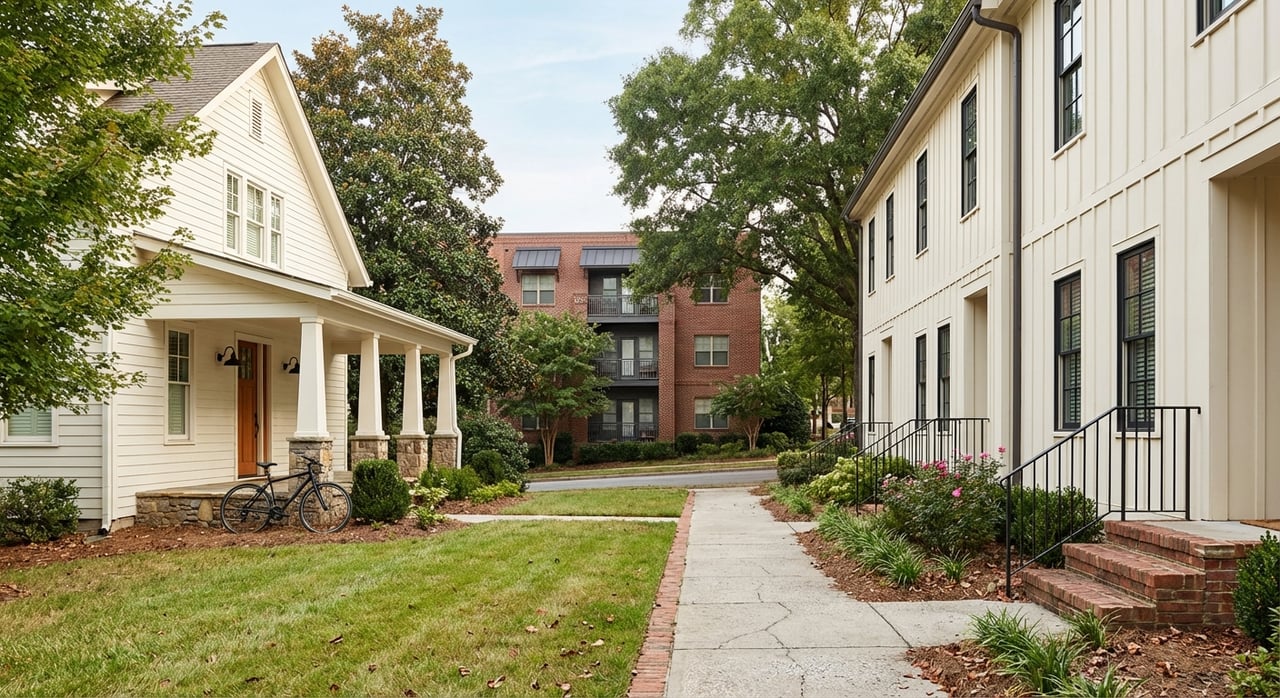
Trying to choose between Chapel Hill and Carrboro when you work or study at UNC? You are not alone. Both towns sit side by side, yet each offers a different daily rhythm, housing mix, and commute experience. In this guide, you will get a clear, UNC-centered comparison of price context, housing types, transit and walkability, schools, and lifestyle so you can match a neighborhood to your priorities. Let’s dive in.
Quick take for UNC buyers
Scale and setting: Chapel Hill is larger at roughly 64,000 residents, while Carrboro is smaller at about 21,000. Chapel Hill includes the UNC campus and Franklin Street. Carrboro’s compact center sits just west of campus with its own civic commons and downtown. You can confirm population context with the U.S. Census for Chapel Hill and Carrboro.
Price snapshot: As of early 2026, recent market snapshots showed townwide medians around $555,000 in Chapel Hill and about $515,000 in Carrboro. Neighborhood-level prices vary widely, especially near campus and in planned communities.
Character: Chapel Hill’s core life revolves around UNC and Franklin Street, with a mix of condos, townhomes, and established neighborhoods plus planned communities like Meadowmont and Southern Village. Carrboro’s downtown centers on independent shops, live music, the farmers’ market, and a bike-forward culture.
Shared systems: Both towns use the same fare-free transit network and the same public school district. Your day-to-day feel will differ by block, but many services are unified across town lines.
Housing types and price context
Neighborhood supply and product type drive value as much as the town name. Here is how options generally break down.
Chapel Hill options
Near-campus condos and flats: These are the go-to choice if you want the shortest walk to lectures, labs, or Franklin Street. Recent local data in late 2025 to early 2026 placed many condo options roughly in the low-to-mid $200,000s up to the $400,000s depending on building, finish level, and proximity. Newer mixed-use buildings near downtown often start higher.
Townhomes in planned communities: Southern Village and Meadowmont offer townhomes and smaller single-family homes with sidewalks, greenways, and on-site retail and parks. Expect neighborhood medians to run higher than the overall town median due to amenities, walkability, and product mix.
Single-family homes: Choices range from older bungalows close to downtown to larger homes in outlying neighborhoods. Detached prices vary by location, lot size, and updates, and typically run higher than condos and many townhomes.
Carrboro options
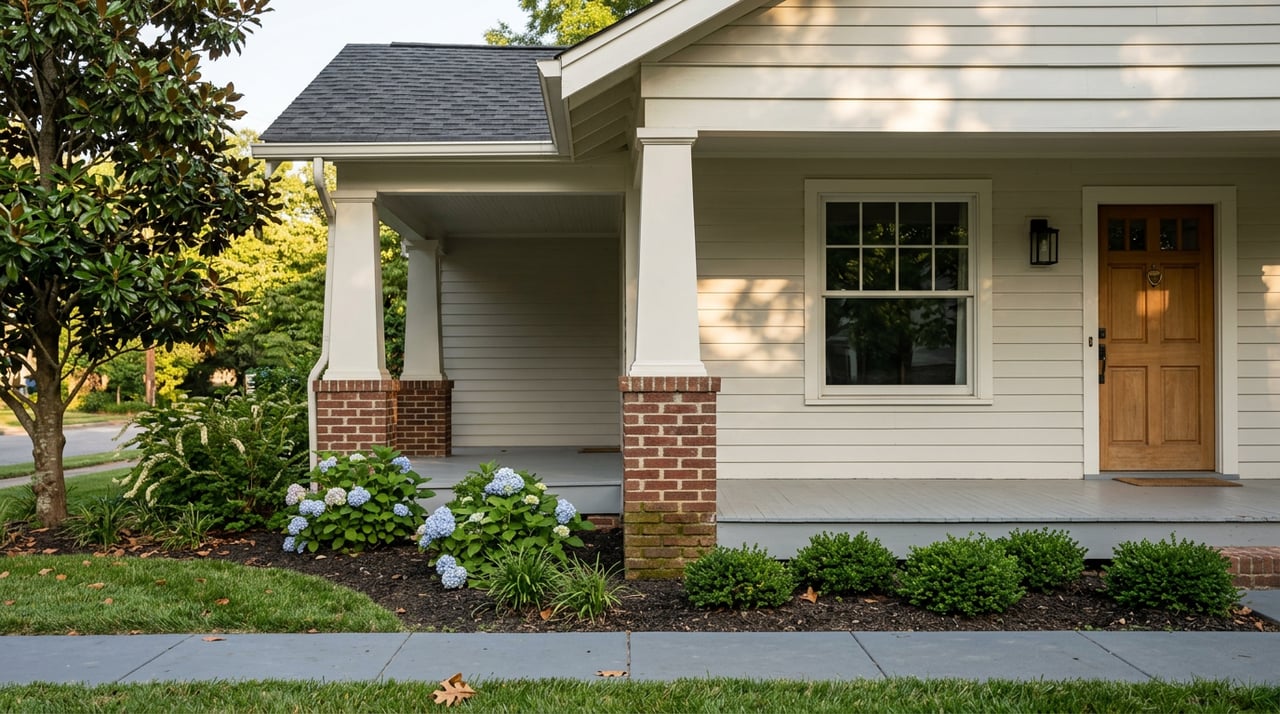
Downtown cottages and small homes: Near Weaver Street Market and the Town Commons, you will find older cottages, renovations, and some infill. Close-in blocks command premiums for walkability and character.
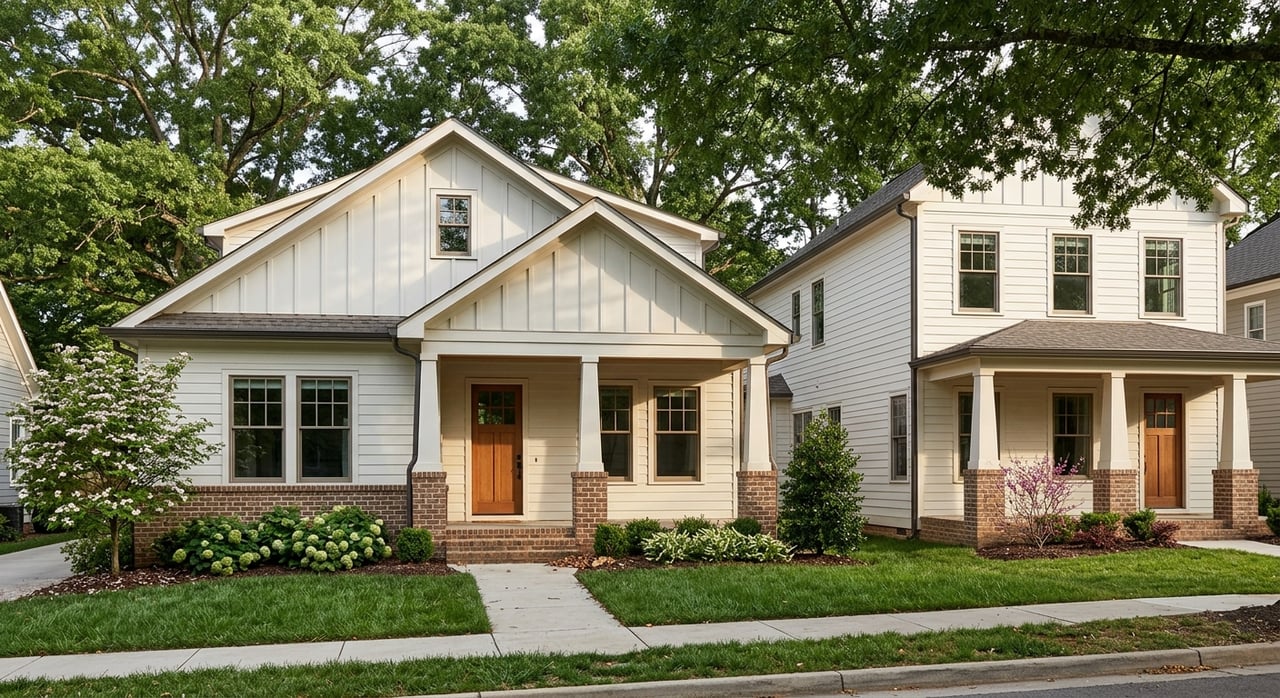
Townhomes and infill near corridors: Newer townhome products and small infill developments have expanded choices for buyers who want lower maintenance and a compact yard. Prices are often comparable to Chapel Hill’s entry-to-mid ranges depending on street and year built.
Larger lots farther out: West and south of downtown Carrboro, lot sizes generally increase and per-square-foot costs can be lower. Commutes to central campus run longer by bus or car from these areas.
Three useful buyer archetypes
Walk-to-class condo or 1-bed: Best match if door-to-door proximity is the top priority. You gain time and reduce reliance on parking permits.
Village-style townhome: Planned communities with parks, trails, and retail appeal to those who value organized amenities and an active neighborhood center.
Cottage near Weaver Street: If you want a tight downtown grid with markets, music, and independent businesses, a Carrboro cottage near the core can be a standout fit.
Commute, walkability, and transit
If avoiding a campus parking permit is high on your list, Chapel Hill and Carrboro make it practical.
Fare-free buses: Chapel Hill Transit operates a fare-free, fixed-route system across Chapel Hill, Carrboro, and the UNC campus. Frequent campus circulators and park-and-ride options can replace a second car for many residents. Review routes and schedules on the Chapel Hill Transit system page and UNC’s transportation overview for day-to-day tips.
Walking vs biking: Many Chapel Hill addresses sit within a short walk of central campus. Carrboro’s center is roughly 1 to 2 miles from the campus core, which translates to a comfortable bike ride or a longer walk, depending on your starting block. Real tolerances vary by person, so it helps to test your specific route at a typical time of day.
Greenways and bikeways: Off-street paths and neighborhood links are expanding across both towns. Carrboro’s Libba Cotten Bikeway and Chapel Hill greenways such as Bolin Creek, Fan Branch, and Meadowmont paths create low-stress connections to campus and shops. Explore regional highlights on Triangle Trails’ Orange County page.
Tip: Measure travel times from any short list of addresses by your preferred mode. Check the nearest frequent bus stop rather than assuming a single townwide commute pattern.
Schools and enrollment facts
Chapel Hill and Carrboro share the same public school district: Chapel Hill-Carrboro City Schools (CHCCS). Assignment is address-based, and both towns feed the district’s elementary, middle, and high schools. For current enrollment and boundary questions, go directly to CHCCS district resources.
Recent operational updates, such as the move to block scheduling at the high school level, have been covered in local reporting. You can read context on schedule changes via Chapelboro’s coverage and confirm the latest details with the district. The key point for buyers is simple: choosing Chapel Hill or Carrboro does not secure a specific school. Always verify an individual property’s assignment with CHCCS before you bid.
Lifestyle and neighborhood tradeoffs
Campus access and nightlife: If you want to walk to seminars, libraries, and Franklin Street dining, the campus-edge neighborhoods in Chapel Hill offer the tightest radius.
Small-town arts and civic life: Carrboro’s downtown features independent shops, live music, and the Town Commons. Learn more about its civic core and community focus from the Carrboro overview. The town also highlights bike-friendly recognition and similar awards on its official site.
Organized amenities and green space: Planned Chapel Hill communities like Meadowmont and Southern Village offer sidewalks, trails, parks, and on-site retail. Many homes in these areas are part of homeowners associations, which typically cover shared-area maintenance and amenities.
Budget sensitivity: Townwide medians are close, but specific neighborhoods can diverge. Close-in, walkable blocks tend to command a premium in both towns, while homes farther from campus often trade at lower per-square-foot prices. If budget is your main constraint, you can widen the search a bit west or south of Carrboro’s center or to other Orange County communities while staying on a transit line.
Decision checklist for UNC buyers
Use these prompts to turn your priorities into a search plan:
- Is walking to your main UNC building the top priority? If yes, focus on campus-edge Chapel Hill addresses and downtown condos. Expect smaller footprints in exchange for time saved.
- Do you value greenways, parks, and an organized neighborhood center? If yes, shortlist planned Chapel Hill communities with embedded amenities and sidewalks.
- Do local shops, live music, and an independent arts scene matter most? If yes, explore Carrboro’s downtown grid near the Town Commons and Weaver Street Market.
- Is budget the overriding factor? If yes, use the latest townwide medians as a baseline, then compare neighborhood ranges. Consider near-core townhomes or slightly farther-flung blocks that still connect to frequent transit.
- Do school boundaries shape your decision? If yes, treat both towns as one CHCCS district and verify each property’s school assignment on the district map before you write an offer. Start at CHCCS.
Commute playbook: how to test fit
- Map it three ways: walking, biking, and transit during your normal commute time. Note the nearest frequent bus route.
- Identify your daily anchors: lab, teaching building, childcare, and your main grocery. Choose an address that reduces total weekly travel time, not just the morning commute.
- Check your greenway options: See if a path or bikeway offers an off-street alternative for part of the route. Start with Triangle Trails’ Orange County overview.
- Confirm the bus plan: Review current Chapel Hill Transit maps and any service changes on the transit site and UNC’s transportation page.
How Terra Nova can help
Choosing between Chapel Hill and Carrboro often comes down to tradeoffs among commute, walkability, housing type, and budget. Our team pairs decades of local experience with a practical, data-first approach tailored to UNC-linked buyers. Terra Nova Global Properties is a long-established, Chapel Hill–area brokerage within the Compass network. We market resale homes, condos, and townhomes, support new construction and land, and provide developer advisory, project sales, and commercial and investor services across Chapel Hill–Carrboro and the broader Triangle.
If you want a calm, confident search with clear market guidance, neighborhood nuance, and strong execution, we are ready to help you compare options, model commute scenarios, and align your offer with the realities of each micro-market. Ready to start? Let’s Connect with Terra Nova Global Properties.
FAQs
Is Chapel Hill or Carrboro closer to UNC’s campus?
- Many Chapel Hill addresses sit within a short walk of central campus. Carrboro’s core is roughly 1 to 2 miles from the campus center, which is a quick bike ride or a longer walk depending on your block.
Can I rely on transit instead of a campus parking permit?
- Yes. Chapel Hill Transit is fare-free and runs fixed routes across both towns and UNC, including frequent campus circulators. Check the latest timetables on the transit site and UNC’s transportation page.
Do Chapel Hill and Carrboro share the same public schools?
- Yes. Both are within the Chapel Hill-Carrboro City Schools district, and assignment is address-based. Confirm any property’s placement through CHCCS.
Which town is generally more affordable?
- Townwide medians have been close in recent snapshots, with Carrboro trending slightly lower than Chapel Hill. Prices vary widely by neighborhood and housing type, so compare ranges block by block.
Where should I look if I want a planned, walkable community?
- Focus on planned Chapel Hill neighborhoods with embedded parks, trails, and retail. These areas often have homeowners associations that maintain common spaces and amenities.
How can I get a feel for Carrboro’s community vibe?
- Start at the Town Commons and Weaver Street area to see markets, music, and civic events. The Carrboro overview provides a helpful snapshot of the core.