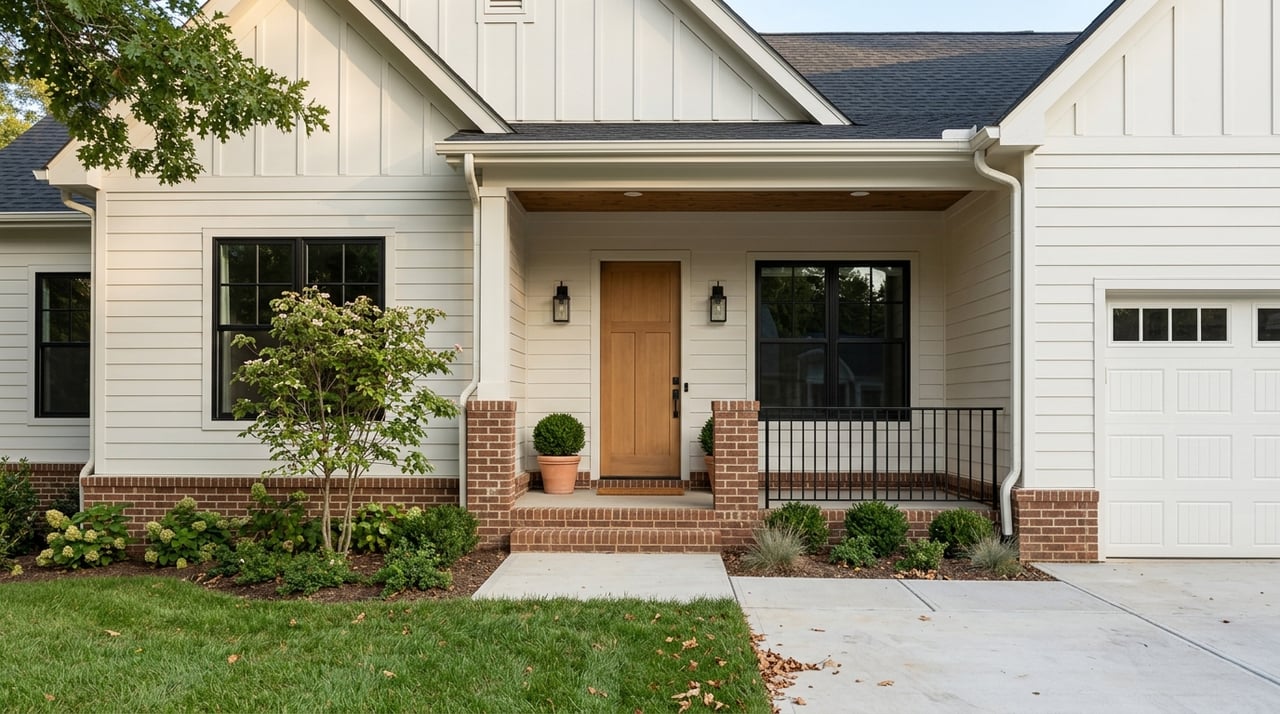
Thinking about buying a brand-new home in Durham? It is easy to get excited by fresh finishes, energy-efficient features, and glossy model homes, but the smartest buyers look beyond the staged photos. If you want a home that fits your lifestyle and holds up well over time, you need to evaluate the neighborhood, the ownership structure, the contract, and the costs just as carefully as the floor plan. Let’s dive in.
Where Durham new construction is showing up
Durham’s new-construction market is spread across several parts of the city rather than concentrated in one place. The city’s growth framework includes the 2023 Comprehensive Plan, the Place Type Map, the Urban Growth Boundary, and Future Growth Areas, all of which help shape where development is more likely to happen.
In practical terms, you will often see new homes in areas where infrastructure, transit access, infill opportunities, or larger redevelopment sites make growth easier to support. Durham also uses small-area plans and a rezoning explorer to track redevelopment pressure, annexations, and land-use changes.
Current examples show several distinct clusters. East Durham and the 27703 corridor include communities such as Sherron Road Townes, Mica Ridge, and Wesley Downs. The Durham-Raleigh edge includes Olive Branch Crossing and Aster Ridge, while Southpoint and NC-751 include Bull City Mod 2.0, and downtown infill includes communities like The Grove and Trailside Townes. Northern Durham also has projects like The View at Highland Park.
The key takeaway is simple: there is no single Durham new-build district. When you compare homes, it helps to compare not just the house itself, but also the corridor around it, the pace of nearby development, and any future land-use changes that may affect your daily experience.
What home styles buyers are seeing
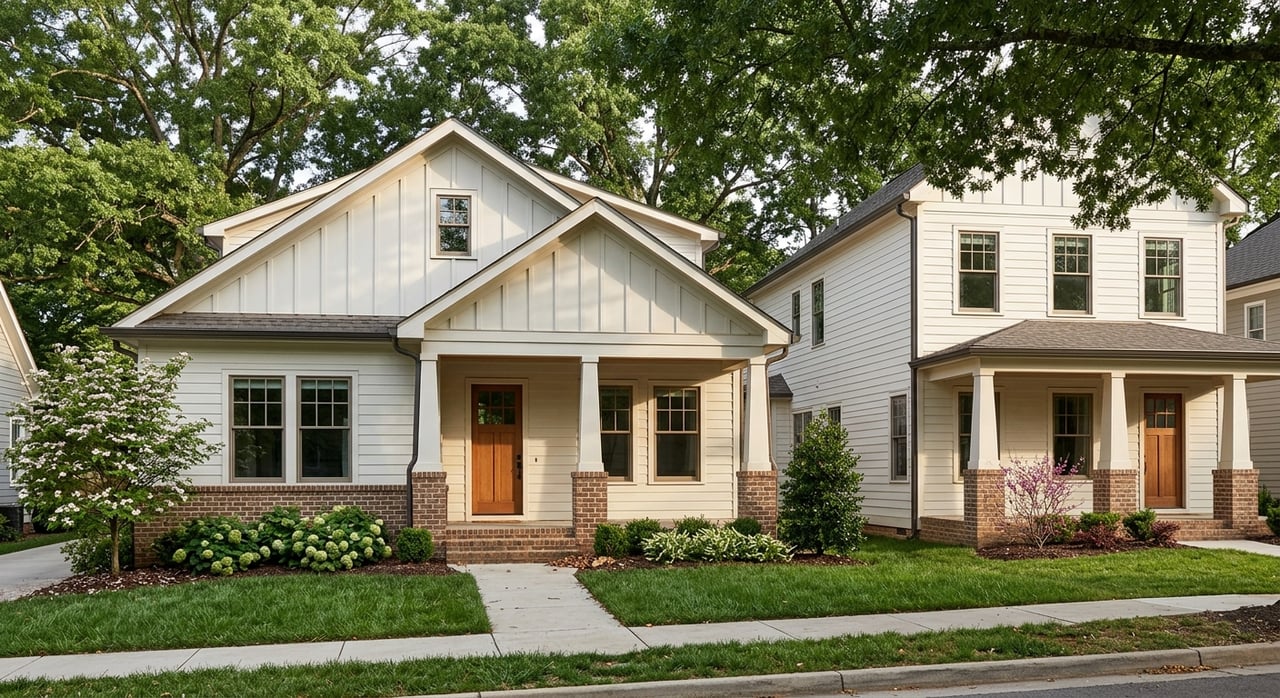
Durham buyers can find a wide range of new-construction products, from compact urban townhomes to larger single-family homes with neighborhood amenities. That variety is a big advantage, but it also means you need to be clear about what you are actually buying.
In the townhome category, some communities offer efficient layouts with smaller footprints, while others feel more like upscale attached homes. Current offerings in Durham include townhomes with 2 to 4 bedrooms, roughly 1,000 to more than 2,500 square feet, one-car garages, balconies, rooftop suites or terraces, and open-concept living areas.
Single-family communities tend to emphasize larger plans and amenity packages. Some are marketing homes with 3 to 5 bedrooms, 2-car garages, lofts, walk-in pantries, and larger square footage. Others pair those homes with amenities such as pools, cabanas, playgrounds, dog parks, or walking paths.
At the higher end of the market, some attached-home communities include premium features like imported cabinetry, high-end appliances, folding balcony doors, EV-ready garages, video doorbells, and smart thermostats. This is one reason Durham’s new-construction market can be tricky to compare at a glance. A townhome in one area may compete more closely with a luxury attached product than with an entry-level townhome elsewhere.
Look closely at included finishes
One of the biggest mistakes buyers make is assuming the model home reflects the standard package. Builder materials often make clear that prices, square footage, renderings, and options can change, and model photos may show upgrades that are not included in the base price.
Before you move forward, ask for a detailed list of standard features and a separate list of upgrades. That should include items like countertops, appliance packages, flooring, lighting, trim details, and outdoor elements. If a rooftop terrace, balcony feature, or designer fixture appears in marketing images, confirm whether it is included in the specific homesite you are considering.
This step can protect both your budget and your expectations. It also gives you a more accurate way to compare one Durham community against another.
Why the location needs a deeper look
With new construction, the house is only part of the decision. In Durham, where new development is spread across downtown infill sites, suburban edges, and employment corridors, the surrounding area can shape your long-term satisfaction as much as the floor plan.
You should look at zoning, nearby streams, floodplain conditions, recorded plats, and any active rezoning or annexation requests near the property. Durham’s mapping tools are designed to help residents understand property conditions and proposed changes, which can be especially useful if you are buying in an area still evolving.
This matters because a quiet streetscape today may still be part of a larger future buildout. Amenities, traffic patterns, adjacent uses, and even access points can change as later phases move forward.
How new-construction contracts differ in North Carolina
Many buyers assume a new home uses the same contract process as a resale purchase. In North Carolina, that is not usually the case.
The state uses separate forms for new construction rather than the standard resale agreement. The NC REALTORS and NC Bar Association form set includes an Offer to Purchase and Contract for New Construction and a New Construction Addendum, but builders and other volume sellers also often use their own contracts.
That difference matters because builder contracts may define closing dates, delays, concessions, and buyer obligations differently from resale agreements. They may also address warranty terms, component warranties, termite protection paperwork, and HOA-charge allocation in a different way than you might expect.
Another important point is warranty coverage. North Carolina law does not require a builder to provide a separate express one-year warranty. However, if the standard new-construction form is used, the seller-builder’s limited warranty generally covers repairs for one year for faulty construction, labor, or materials unless the builder substitutes its own written warranty.
Due diligence still matters on a brand-new home
A brand-new home is still a home that needs careful review. The North Carolina Real Estate Commission explains that due diligence is your opportunity to gather information about the property and surrounding area, review documents, and order inspections.
That means inspections should still be part of your process. The Commission specifically notes that newly constructed homes should still be inspected, and buyers should pay attention to licensed home inspectors’ recommendations for follow-up items such as radon testing, termite review, survey work, and permit verification.
For buyers, this is one of the most important mindset shifts in new construction. New does not automatically mean flawless, and a thorough review can help you catch issues before closing rather than after move-in.
Closing attorney and timing questions to ask
Builder contracts can also affect who chooses the closing attorney and where closing happens. According to the North Carolina Real Estate Commission, the parties should negotiate the time and place of closing, and choosing an attorney is the decision of the party seeking representation.
At the same time, the Commission notes that developer and volume-seller forms often limit those choices or connect them to seller concessions. In plain terms, a builder may offer an incentive that is tied to using a certain closing process or provider.
That does not automatically make the deal better or worse, but it does mean you should review the terms carefully. Understanding those tradeoffs early can help you compare offers and avoid surprises late in the transaction.
HOA and condo documents deserve real attention
One of the most overlooked parts of buying new construction is the ownership structure. Not every Durham townhome or attached-home community is owned the same way.
Some homes are fee simple and part of a planned community association. Others may be condo-owned, which can change how maintenance, insurance responsibilities, common elements, and limited common elements are defined.
This distinction matters more than many buyers realize. Under North Carolina law, planned community and condominium associations can adopt rules, set budgets and reserves, collect assessments, regulate common elements, and charge certain fees or fines after required notice and process.
If you are buying into an association, ask to review:
- The current budget
- Reserve information
- Annual income and expense statements
- Balance sheet
- Rules and regulations
- Recent meeting minutes
- A statement of unpaid assessments
These documents can tell you whether the community’s amenity package is well funded, what your dues actually cover, and whether future special assessments may be possible.
Evaluate amenity packages carefully
Amenity-rich marketing can be appealing, especially in newer Durham communities where builders are promoting pools, cabanas, clubhouses, fitness centers, dog parks, walking paths, playgrounds, and even disc-golf features. Still, the right question is not just what is promised. The better question is what exists now, who maintains it, and how is it paid for?
Before you commit, ask whether each amenity is already built and deeded to the association, planned for a later phase, or maintained by another party. You should also ask whether the cost is included in regular dues or if separate fees or future assessments could apply.
It is also helpful to ask when developer control of the board ends. That transition can affect how decisions are made about maintenance, rules, spending, and long-term planning.
A practical checklist for Durham buyers
If you are comparing new-construction neighborhoods in Durham, keep this checklist handy:
- Is the home fee simple, condo-owned, or part of a master-planned HOA?
- What features and finishes are included without an upgrade charge?
- Do the model photos show upgrades that are not standard?
- Which amenities are complete today, and which are planned for later phases?
- Are amenity costs covered by dues, separate fees, or possible future assessments?
- Can you review the latest budget, reserves, minutes, and unpaid-assessment statement?
- What inspections are allowed before closing?
- Who chooses the closing attorney, and are incentives tied to that choice?
- Are there nearby rezoning, annexation, floodplain, stream, or plat issues you should understand?
Why local guidance helps with new construction
Buying new construction in Durham can be exciting, but it also asks you to make decisions about future phases, builder contracts, ownership documents, and location trends that are not always obvious on a first tour. The right guidance helps you slow down, ask better questions, and compare communities on more than surface appeal.
That is especially true in a market like Durham, where options range from downtown infill townhomes to larger suburban-style neighborhoods and luxury attached-home products. A thoughtful evaluation can help you choose a home that works not just on closing day, but for the years ahead.
If you want a clear, experienced perspective on Durham new construction and how to compare your options, reach out to Patricia Owen. You will get practical guidance grounded in local market knowledge and a relationship-first approach.
FAQs
What should you compare when looking at Durham new-construction neighborhoods?
- You should compare the home itself, the surrounding corridor, ownership structure, included finishes, amenities, dues, contract terms, and any nearby zoning or rezoning activity.
Do Durham new-construction homes still need inspections?
- Yes. The North Carolina Real Estate Commission says newly constructed homes should still be inspected, and follow-up recommendations may include radon testing, termite review, survey work, and permit verification.
Are all Durham townhomes owned the same way?
- No. Some are fee simple within a planned community, while others are condo-owned, which can affect maintenance responsibilities, insurance obligations, and the treatment of common elements.
What should you review in a Durham HOA or condo community before buying?
- You should review the budget, reserve information, annual financial statements, rules, meeting minutes, and any statement showing unpaid assessments to better understand dues, funding, and possible future costs.
How are new-construction contracts in North Carolina different from resale contracts?
- North Carolina uses separate forms for new construction, and builders often use their own contracts, which may handle closing dates, concessions, warranties, and closing logistics differently from standard resale agreements.