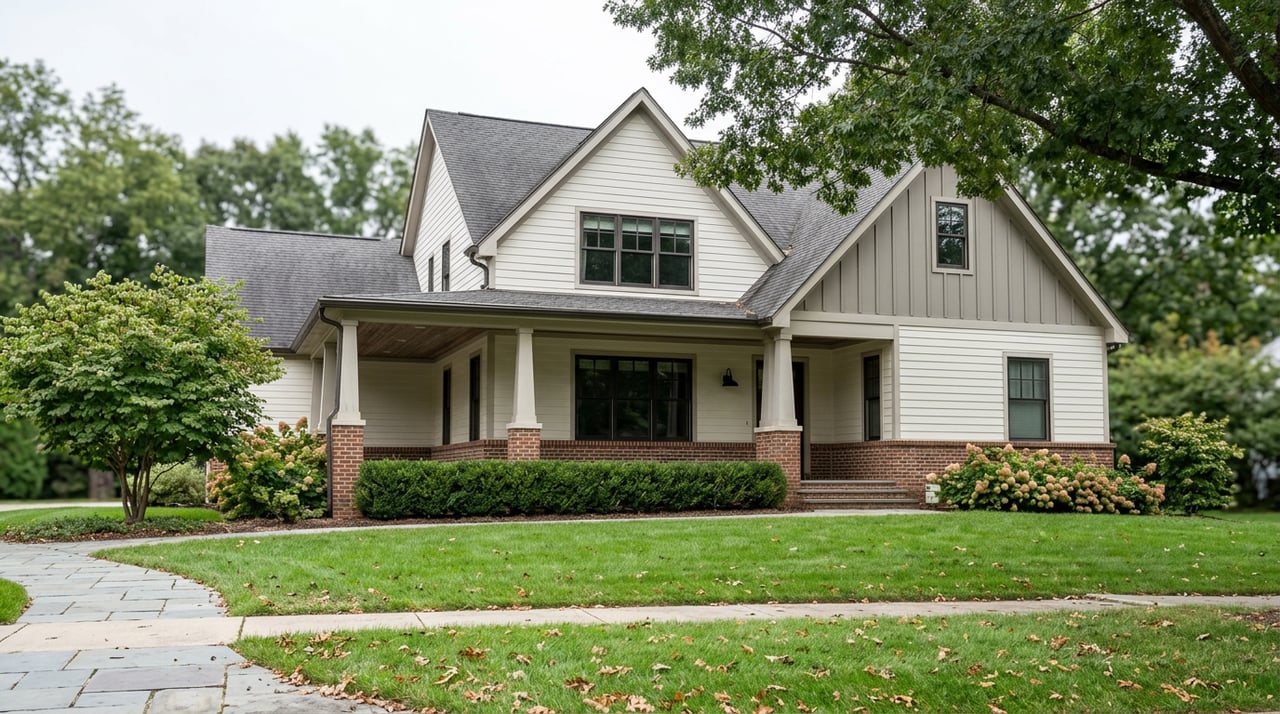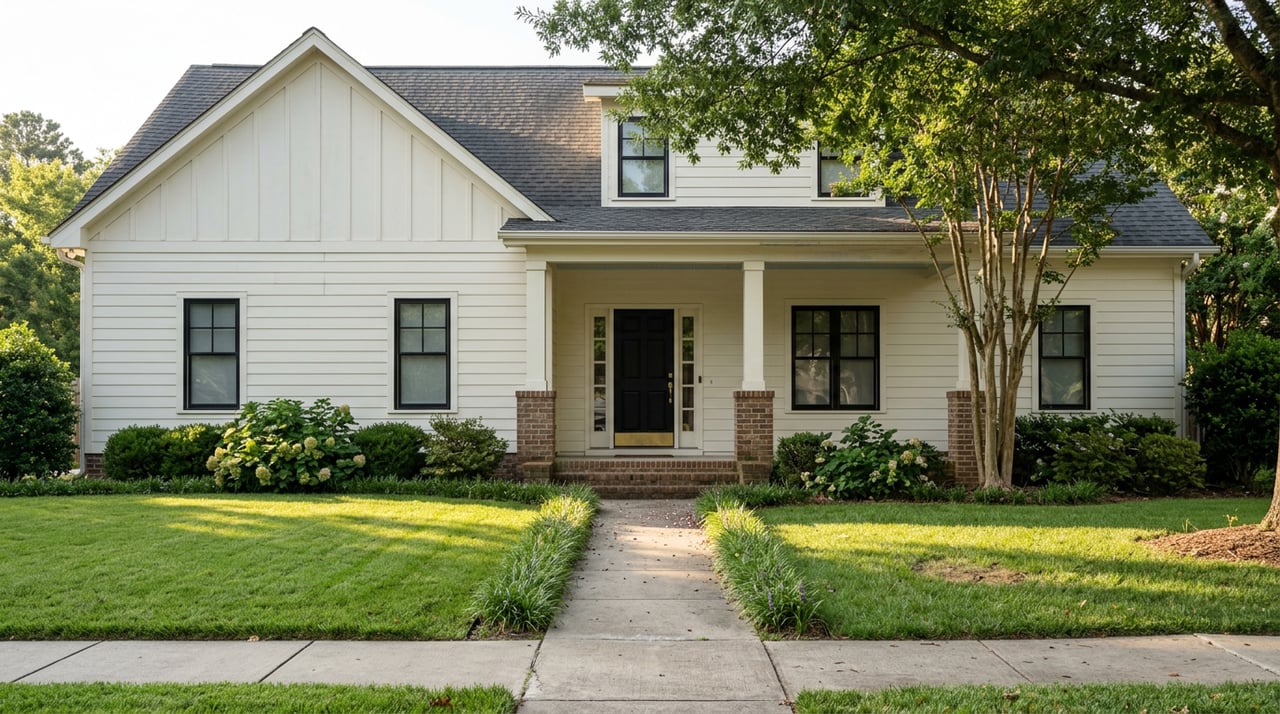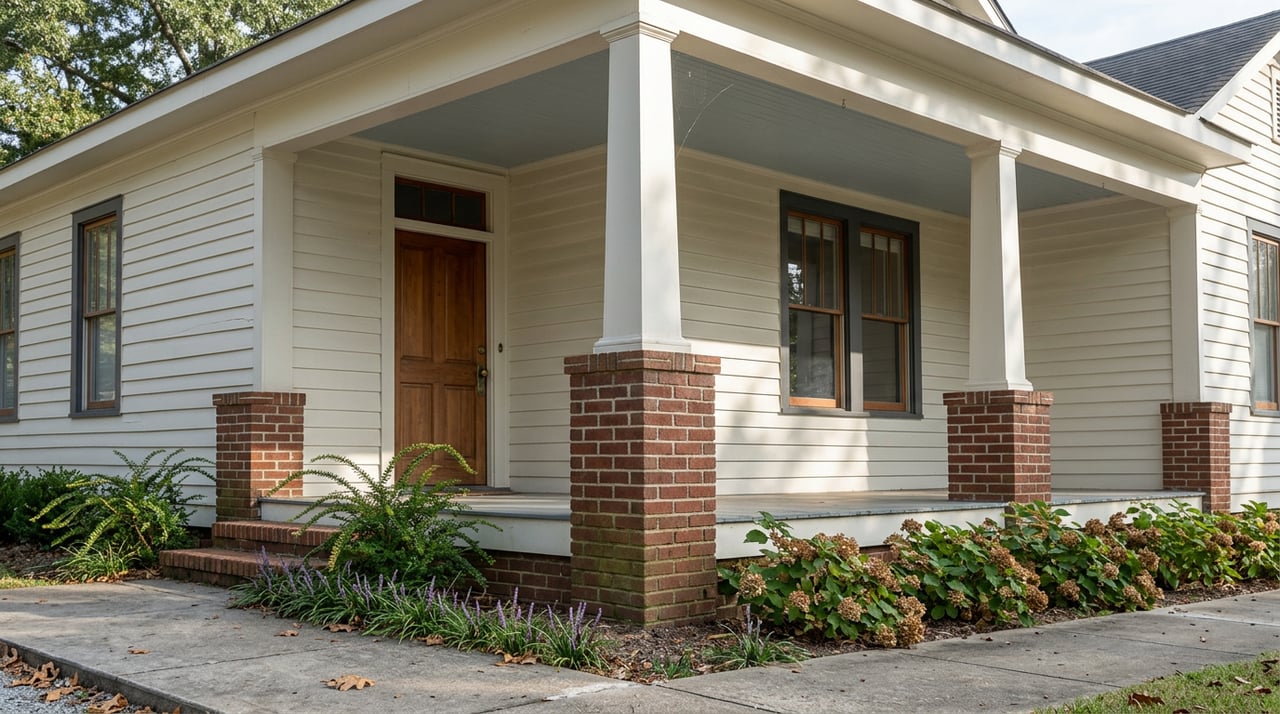
Two houses go under contract the same week, a few blocks apart. One sits on Nash Street, a few doors down from the courthouse. The other sits in Waterstone, one of the newer neighborhoods that has grown up near downtown. Both buyers plan the same first project: new windows, a repainted exterior, maybe a porch enclosure before winter. The Waterstone buyer pulls a standard building permit and starts work within weeks of closing. The Nash Street buyer cannot legally touch the exterior until a town commission says so, and that approval runs on its own calendar, not the buyer's.
This is the part most house-hunting conversations about Hillsborough skip. The town's charm gets discussed in terms of age and architecture. What actually governs a renovation budget and timeline is a boundary line, and whether your address falls inside or outside it.
The boundary is older than most of the houses outside it
Hillsborough's local historic district was created through a preservation ordinance passed in 1973, and it is listed on the National Register of Historic Places, covering more than 100 houses, churches, and buildings dating to the 18th and 19th centuries. The National Register nomination documents the district more precisely: 529 contributing buildings, plus 9 contributing sites, 13 contributing structures, and 2 contributing objects, spread across the commercial core and the residential blocks around it. Named contributing properties include the Burwell School, the Nash-Hooper House, the Old Orange County Courthouse, and St. Matthew's Episcopal Church. An ordinary bungalow on Margaret Lane carries the same designation as the courthouse, which means it carries the same review requirement.
The district's footprint runs along Churton Street and out into the residential grid around it, including Nash Street, King Street, Queen Street, Tryon Street, Corbin Street, Cameron Street, and Union Street. It is not a small landmark zone around one museum house. It is most of the original town platted in 1754.
One detail catches almost everyone off guard: a property doesn't need to be centuries old to count as historic inside this boundary. Design guidance for the district defines the period of significance as ending 50 years before the current year, which means the eligible date range moves forward every year. A house built in 1976 is already old enough to be treated as historic-era construction within the district today. The town describes this as a range running from Georgian and Federal buildings in the late 1700s to contemporary construction, and that range keeps expanding.
What sits outside the line
Not everything in Hillsborough carries this obligation. Newer neighborhoods including Waterstone, Collins Ridge, and Forest Ridge have added hundreds of homes near downtown, and they were built under standard modern building code with no historic-district review requirement at all. The boundary is, roughly, the downtown core along Churton Street and the surrounding residential blocks. Once you're outside that footprint, exterior renovation runs on ordinary permitting timelines.
| Inside the Historic District | Outside the boundary (e.g. Waterstone, Collins Ridge, Forest Ridge) | |
|---|---|---|
| Who reviews exterior changes | Historic District Commission, or staff for minor work | Standard town permitting only |
| Roofing, siding, window replacement | May require a Certificate of Appropriateness or staff sign-off | Standard building permit |
| Approval calendar | Tied to a monthly commission meeting | No design-review calendar |
| Legal status before starting work | Unlawful to begin without approval | Governed by standard code, not a preservation ordinance |
Two tracks, and the harder one runs on a monthly clock
Inside the boundary, exterior work splits into two tracks. Some items, including certain lighting changes, signage, and the removal of mature trees, can sometimes be approved administratively by town staff as minor work or ordinary maintenance. Anything more substantial, such as additions, visible changes to windows or doors, roof work, or new construction, needs a formal Certificate of Appropriateness from the commission itself. The line between the two isn't always obvious from the outside, which is exactly why the town recommends a pre-application conference with staff at least four to six weeks before you even submit.
Roofing is a good example of how this plays out in practice. A local roofing contractor working regularly in the district notes that replacing or significantly repairing a visible roof section, chimney, or dormer can require a Certificate of Appropriateness or a staff-approved minor works permit before a shingle is touched, and for the district's oldest homes, matching the original material and profile, such as slate, is often a condition of approval rather than a courtesy. If your inspection turns up a roof that needs work, that repair is not automatically a same-season fix once you're inside the boundary.
The calendar math a buyer needs before writing a timeline
Here is the mechanism that actually determines when work starts. The Historic District Commission meets once a month, on the first Wednesday at 6:30 p.m., at the Town Hall Annex on East Corbin Street. A completed Certificate of Appropriateness application is due by noon on the Wednesday three weeks before that meeting. Before that, the town strongly encourages a pre-application conference with staff four to six weeks ahead of the submittal deadline to work out project details in advance.
Then there's a capacity limit few buyers think to ask about: the commission allows a maximum of four major certificate applications on each agenda. Anything incomplete, or anything that arrives after the first four complete applications for that cycle, automatically rolls to the next month's agenda as space becomes available.
Stack those pieces together and a porch enclosure imagined as a spring project can slip into summer without anyone doing anything wrong. Count backward from the meeting: three weeks for the application deadline, four to six weeks before that for the pre-application conference, and then hope your complete application lands among the first four in the queue. If it doesn't, add another full month. None of this is unusual or punitive. It's simply a fixed monthly rhythm that a buyer used to same-week contractor scheduling has to plan around.
The National Register name creates a common assumption
The historic district's National Register listing does real work for the town's identity, but it is a separate designation from the local historic district that triggers the Certificate of Appropriateness requirement. One governs recognition and eligibility for certain federal and state programs tied to historic status. The other, the local ordinance passed in 1973, is what actually requires town approval before you touch an exterior wall, roofline, or window. Buyers sometimes assume the two are interchangeable, which can lead to budgeting for benefits or exemptions that don't automatically apply. If a renovation plan depends on any preservation-related credit or program, confirm the property's specific eligibility rather than assuming the historic designation alone settles it.
What this means depending on which side of the line you're on
If you're buying inside the boundary, the practical move is to identify before you write an offer whether your planned changes fall into minor or major territory, and to get the pre-application conference on the calendar as early as possible, ideally before closing. A seller or listing agent can typically tell you whether recent exterior work on the home went through commission review, which is a reasonable clue to how the town has treated similar projects on that block.
If you're buying in Waterstone, Collins Ridge, Forest Ridge, or another neighborhood outside the boundary, none of this calendar applies. Your renovation timeline is governed by standard permitting, and a contractor's estimate of "a few weeks" is a much more reliable number.
Frequently asked questions
Does every exterior change in the district need formal commission approval? No. Some items, including certain lighting, signage, and mature tree removal, can be approved administratively by staff as minor work or ordinary maintenance. The distinction isn't always self-evident, which is why a pre-application conference with staff is worth scheduling before you assume either way.
Is a National Register listing the same as the local historic district? No. They are related but separate designations. The local district, created by a 1973 town ordinance, is what requires a Certificate of Appropriateness before exterior work. The National Register listing is a federal recognition program layered on top of it.
Do homes in newer Hillsborough neighborhoods ever face similar review? Generally no. Neighborhoods such as Waterstone, Collins Ridge, and Forest Ridge sit outside the historic district boundary and were built under standard modern building code, without a design-review requirement.
How far ahead should I plan a major exterior project inside the district? Given the monthly meeting cadence, the three-week application deadline, the recommended four-to-six-week pre-application window, and the four-major-application cap per agenda, it's reasonable to plan on two to three months minimum from decision to hearing, longer if a given month's agenda fills first.
Buying inside Hillsborough's historic core has real rewards, but the calendar that governs your first renovation is different from the one governing a house a mile away, and it pays to know which one applies before you sign anything. If you're weighing a property on either side of that line, Terra Nova Global Properties can walk through what a specific address means for your renovation plans and timeline. Let's Connect.